
As you know, Michigan weather can be unpredictable, from snow and ice dams in winter to hailstorms and high winds in spring and summer. Your roof takes the brunt of all that harsh weather, and sometimes damage occurs that needs fixing right away. However, roof damage can get costly to fix, and the process can be confusing if you don’t know what to expect.
Knowing the ins and outs of roof insurance claims in Michigan can ensure a smooth repair process guided by a trusted roofer from start to finish. Has your roof suffered storm damage? Here’s what you should know about roof insurance claims in Michigan and how they work.
What Types of Roof Damage Are Covered?
Most homeowners’ insurance policies cover sudden and accidental damage, and not normal wear and tear. Roof insurance claims in Michigan typically involve:
- Wind damage (i.e., lifted or missing shingles)
- Hail damage
- Fallen tree limbs
- Ice dam damage
- Storm-related leaks
Insurance companies will usually cover damage caused by severe weather events, but may not cover anything if the roof is at the end of its lifespan or regular maintenance was neglected over the years. This is why keeping a record of maintenance, repairs, and inspections is so important. It’s also important to get storm damage addressed immediately.
Here’s a look at what you can expect when filing roof insurance claims in Michigan.
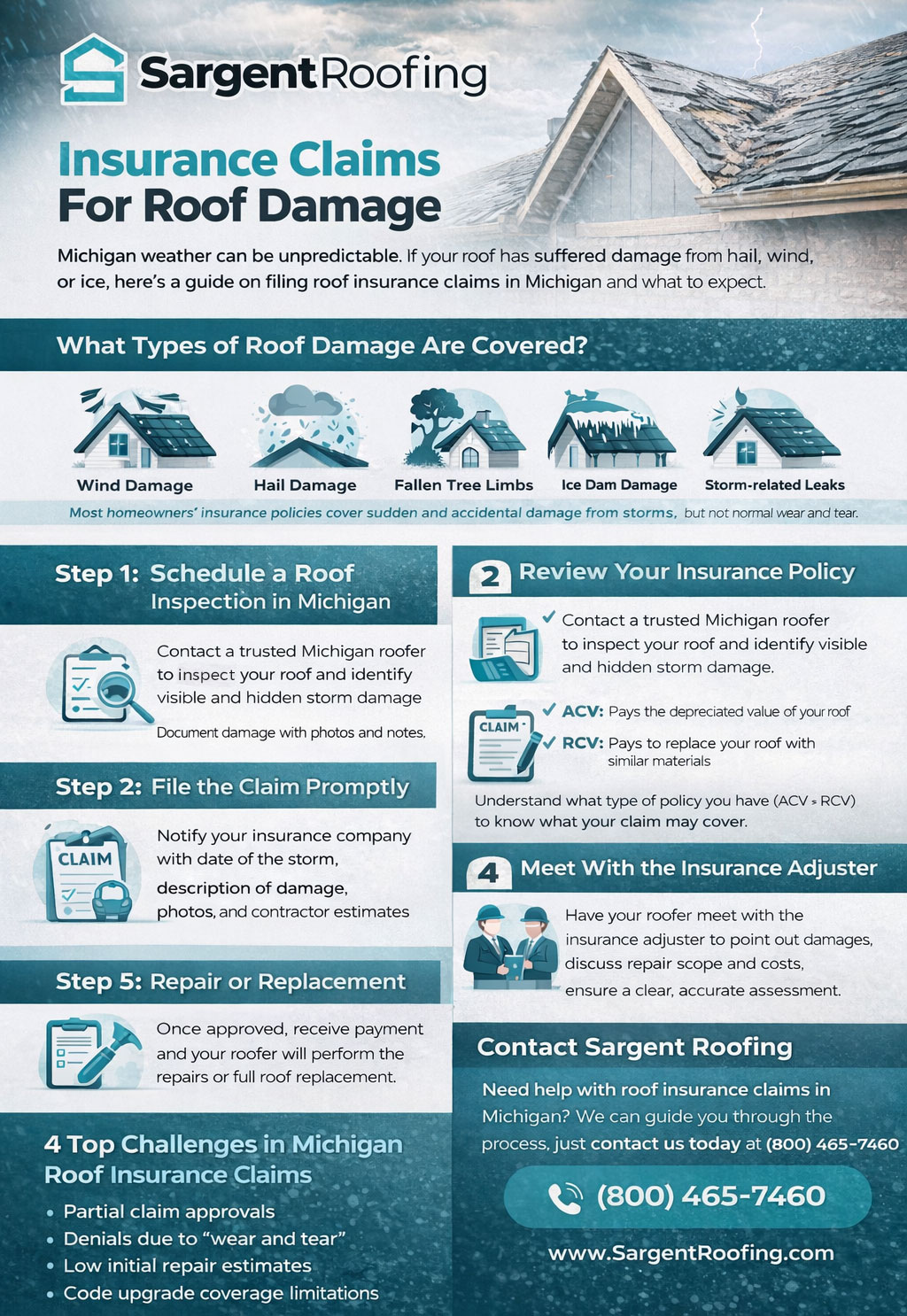
Step 1: Schedule a Roof Inspection in Michigan
If you suspect storm damage to your roof has occurred, reach out to a trusted Michigan roofing contractor for an inspection to:
- Identify visible and hidden storm damage
- Document damaged areas with photos and notes
- Provide a repair or replacement estimate
A roofing professional experienced in roof insurance claims in Michigan can help determine whether the damage qualifies for reimbursement under your policy, then walk you through next steps.
Step 2: Review Your Insurance Policy
Michigan homeowners’ policies can be divided into two main settlement types:
- Actual Cash Value (ACV): Pays the depreciated value of your roof at the time of loss.
- Replacement Cost Value (RCV): Pays what it costs to replace your roof with similar materials (minus the deductible).
If your roof is older, depreciation may significantly reduce your payout under an ACV policy. Read your policy and ask questions before you file a claim to ensure realistic expectations.
Step 3: File the Claim Promptly
Next, contact your insurance company and let them know about the storm damage. Waiting will only serve to delay your claim, and you don’t want your roof to fall victim to further damage over time. Provide your insurance agent with:
- Date of the storm or event
- Description of damage
- Photos and inspection documentation
- Contractor estimates
Once they receive this information from you, they will send out an insurance adjuster to view the damage and determine the claim payout.
Step 4: Meet With the Insurance Adjuster
Make sure your Michigan roofing contractor is present when the insurance adjuster visits your property. This way, your contractor can:
- Show the adjuster the exact area of storm damage
- Make sure the adjuster doesn’t overlook anything critical
- Answer questions about repair scope and costs
Remember: adjusters work for the insurance company; your contractor works for YOU. Make sure both are present for a clear, accurate assessment.
Step 5: Repair or Replacement
If your claim is approved, you will receive a check from the insurance company based on the approved scope of work. If the damage is minor and limited, only a repair may be needed. If the damage is major and widespread, a full roof replacement will be needed. Your roofer will then complete the work.
4 Top Challenges in Michigan Roof Insurance Claims
Filing a claim isn’t always as straightforward as many homeowners think. They can be fraught with challenges and delays due to:
- Partial claim approvals
- Denials due to “wear and tear”
- Low initial repair estimates
- Code upgrade coverage limitations
Again, it’s important to review your coverage details. For example, if you need to replace your roof, Michigan building codes may require updates, such as proper ventilation or ice barrier installation, as part of the process. However, not all policies automatically cover code upgrades. Know what your policy entails to avoid surprises.
Protecting Your Investment
Roof damage is common with Michigan’s harsh winters and storm seasons. Determining the extent of damage, filing roof insurance claims in Michigan promptly, and partnering with a trusted roofer to help you with the process and perform the work are all imperative in ensuring a smooth experience.
Contact Sargent Roofing
Need help with roof insurance claims in Michigan? We can guide you through the process. Just contact us today at (800) 465-7460.